
Guided hikes on Le Pouce
Nobody has to hire a guide for Le Pouce, and most people do not. Those who do are usually buying something specific. Hands-on help on the exposed finish, company and local knowledge on the Port Louis side, a transfer from a hotel on the coast, or someone who can name the plants and tell the Darwin story. This page explains how guided outings run in practice, what they include and what to ask before you pay.
Read the guide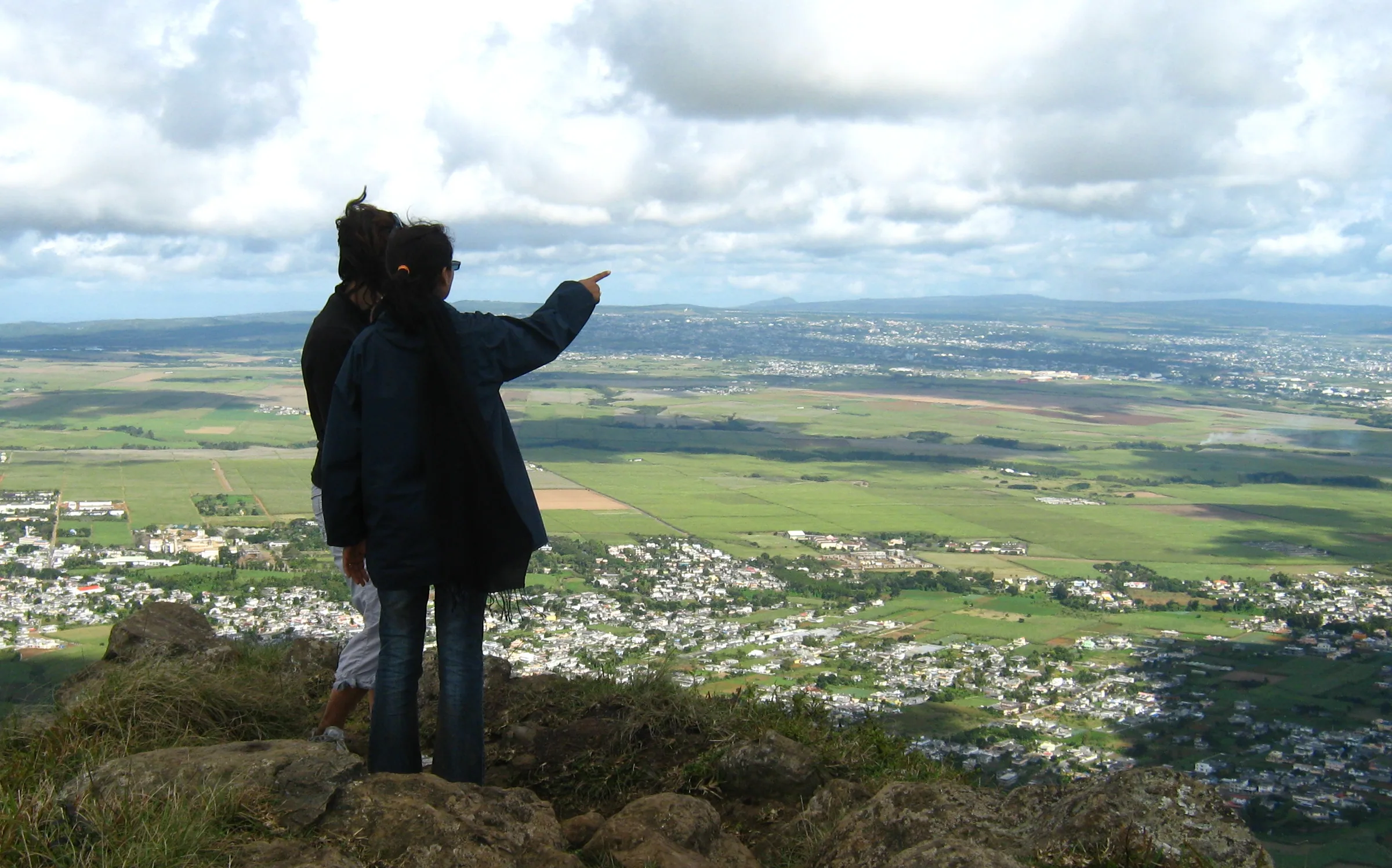
What you are actually buying
Le Pouce is free to climb, waymarked and walked every day without guides, so a guided outing is not buying access. It buys judgement on the final spur, where the path narrows onto the thumb and the last hundred metres are steep and exposed, and it buys help with identifying the correct branch at the kiosk junction or the Port Louis fork. For visitors staying on the coast without a car it also buys the logistics, because the Petit Verger trailhead is the end of a farm track with space for a handful of cars and no bus to the door.
On the Port Louis side the case is stronger. The Tranquebar approach is longer, more thinly marked and has a documented record of robberies, including one at knifepoint at Le Dauguet in 2025. Local guides there are company, navigation and a familiar face in the neighbourhood at the trailhead. A guide who agrees to the through-hike from Port Louis to Moka also solves the problem of getting back, which is otherwise a bus connection.
The third thing a guide sells is the mountain’s story. Charles Darwin climbed Le Pouce in early May 1836 during the voyage of the Beagle and wrote about the view over the cultivated plain, the north-western flank has been a nature reserve since 1951 and holds cloud-forest plants found nowhere else, and the Mauritius kestrel was released into the Moka Range in the early 1990s. None of that is on a signpost. A guide who knows it turns a two-hour climb into a morning about the island, and that is a fair reason to pay.
The formats you will see
Listings for Le Pouce fall into three shapes, and the names vary more than the content.
Timings matter more than labels. A hike that starts at 08:30 in January puts you on the open shoulder in full sun by 09:30, which is why private groups often start at 07:00. Ask what time you will be walking, not just what time you will be collected. Group sizes are rarely stated in listings. Ask, because a party of twelve on the final spur moves at the pace of its slowest member and spends a long time taking turns on a summit that is uncomfortable above about ten people.
| Format | Duration | What the morning looks like |
|---|---|---|
| Private trek | About 3 hours | A licensed guide and your own group, an early start such as 07:00 to 11:00, a trailhead meeting point or hotel pickup by arrangement |
| Half-day group hike | About 4 hours, often from 08:30 | A small mixed group, the Petit Verger route up and down, a long break on the shoulder, finish around midday |
| Full day with lunch and transfer | Most of the day | Pickup from the coast, the hike, a Mauritian lunch afterwards and sometimes a stop in Moka or Port Louis |
| Local operator morning | 08:30 to 12:00 | Described as about 4 km and 400 m of climbing, meeting at the trailhead |
What is usually included, and what is not
Inclusions vary by operator and format, so read the listing rather than assuming. The pattern across current listings is consistent enough to summarise.
If a listing says simply that the hike is easy, ask what the guide does at the final spur. The honest answer is that some clients stop at the shoulder, and that the guide decides on the day.
- Usually included. A licensed guide, the walk itself, and for full-day formats a transfer and lunch.
- Sometimes included. Water and a snack, walking poles, a short briefing on the plants and the Darwin story, photographs taken by the guide.
- Often not included. Hotel pickup on a half-day group hike, insurance beyond the operator’s own cover, and anything at the trailhead, where there is no shop or café.
- Never included. The weather. Operators cancel or shorten in heavy rain, and a good one will say clearly that the summit is at the guide’s discretion.
Age and fitness limits operators state
One listing checked on 29 October 2026 sets a minimum age of 10 and describes three to four hours of walking. Limits belong to the individual outing, not the mountain itself. Tell the organiser about your experience, confidence on exposed ground and any limitations affecting the walk. For medical concerns, seek advice from a health professional before booking.
If you have knee or ankle trouble, say so before booking. The descent of the Saint-Pierre side is where sprains happen, as the stretcher evacuation of a hiker in August 2026 showed, and a guide who knows that in advance will set a slower pace and offer poles. If you are nervous of heights, say that too. A guide cannot remove the exposure on the trench, but can tell you honestly whether the shoulder is your summit.
How the morning runs
Allowing for a half-day format from Moka, the shape of a guided morning is predictable.
Meeting and briefing
Groups meet at the Petit Verger car park above Saint-Pierre or are collected earlier from a hotel. The guide checks footwear and water, explains the route and usually says plainly that the summit depends on wind and cloud.
The farm track and the forest
The first half hour is a gentle climb through cane on a farm track, past a kiosk and a small rock shrine, then into forest switchbacks. Guides use this section to set the pace and talk about the mountain.
The shoulder
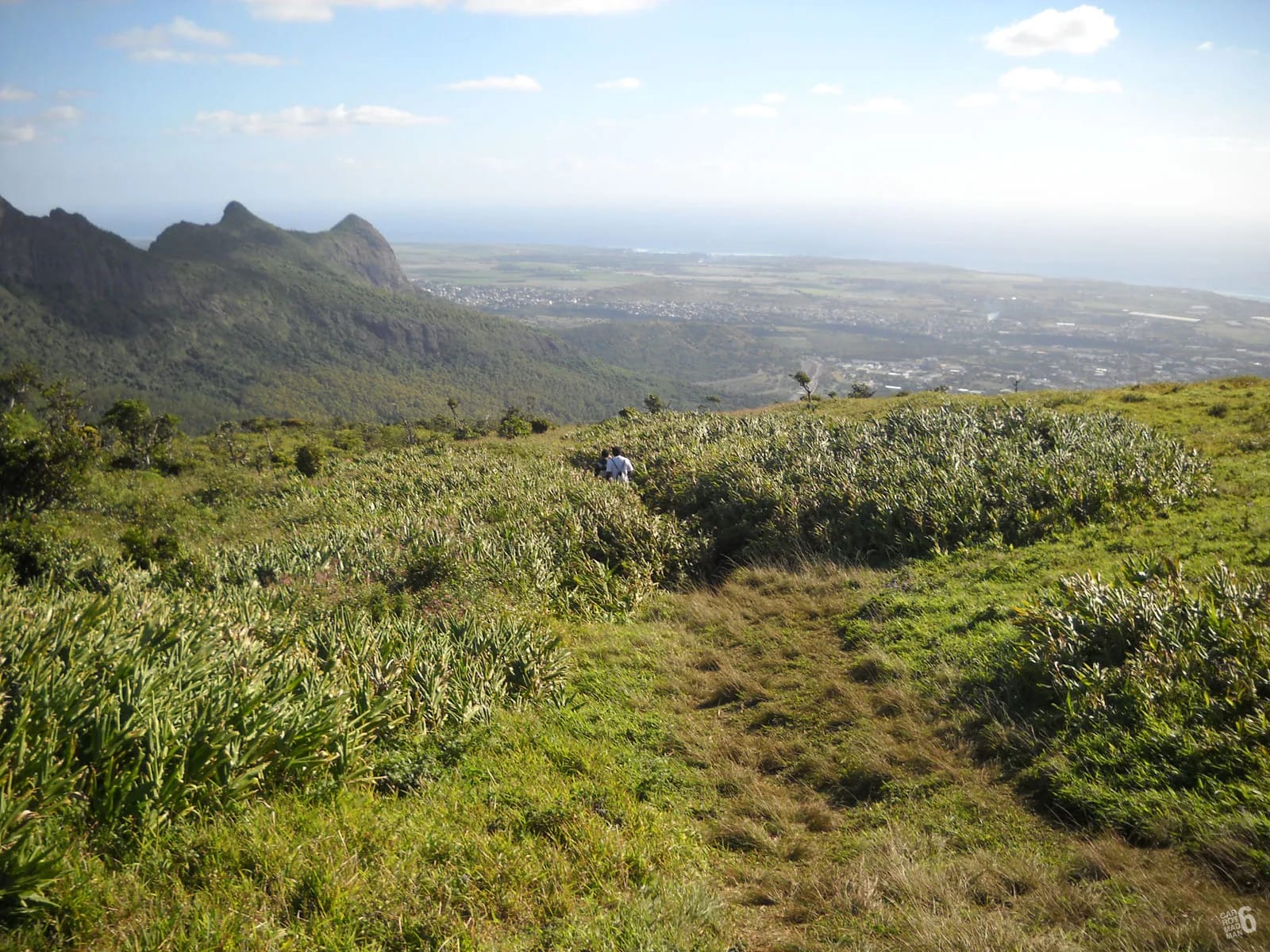
Most groups reach the open shoulder at roughly 620 m in about an hour. This is the long rest, the first big view over Port Louis, and where anyone who prefers not to continue waits with the view.
The final spur
The guide goes first, shows the handholds on the rock step and the line through the trench, and keeps the group spaced on the narrow sections. On the small summit groups take turns and stay seated.
The descent
Back down the same way, slower on the forest section when it is wet. Half-day groups are usually at the car park around midday.
Questions to ask before booking
A few direct questions separate a good outing from a disappointing one, and any operator worth paying answers them readily.
This site does not recommend operators by name and does not sell guided hikes. Compare listings, ask the questions above and choose the one that answers plainly. A guide who says that the summit is sometimes not possible is being honest, not unhelpful.
- Which trailhead do you use, and what time will we actually start walking?
- How many people will be in the group, and how many guides?
- Is the guide licensed, and does the operator carry liability insurance that covers hiking?
- What happens if the summit is in cloud or the wind is strong? Is the price the same if we stop at the shoulder?
- What is included? Water, snacks, poles, transfer, lunch?
- What is the cancellation policy for heavy rain or a cyclone warning?
- Do you take children under 10, and what is the youngest child you have guided on this route?
- If we start in Port Louis, how do we get back from Moka, or the other way round?
Questions people ask
Do I need a guide for Le Pouce?
No. There is no fee, no permit and no requirement to be guided on either route, and no climbing gear is needed, unlike neighbouring Pieter Both where ropes and a guide are used for the summit boulder. A guide helps if it is your first mountain, if you are nervous of heights, if you are starting from Port Louis, or if you want the history and the plants explained.
How long is a guided Le Pouce hike?
Private treks are listed at about three hours, half-day group hikes at about four hours from around 08:30, and full-day formats with lunch and a transfer from the coast take most of the day. The walking itself from Petit Verger is 2 to 3 hours for most groups. The rest is briefing, a long break on the shoulder, turns on the small summit and the drive.
How much does a guided hike cost?
Prices vary with format and group size, from a short private trek to a full day with transfer and lunch, and listings change often, so this guide does not quote them. Compare what is included rather than the headline figure. A transfer from the coast and lunch can be most of the cost of a full-day format, while a trailhead meeting point keeps a private trek simple. Ask whether the price changes if the group stops at the shoulder.
Can children join a guided hike?
Some outings accept children from 10 years old. Confirm the rule for your booking and explain the child’s hiking experience. Age alone does not establish readiness for the exposed finish. Ask how a stop below the summit is handled.
What happens if the weather is bad?
Operators cancel or shorten in heavy rain and during cyclone warnings, and a responsible guide will not take a group onto the final spur in strong wind or low cloud. Ask before booking whether the price is the same if the hike stops at the shoulder, and what the cancellation terms are. The shoulder still gives the view over Port Louis, so a shortened hike is not a wasted morning.
Can a guide take me from Port Louis over the mountain to Moka?
Ask. The through-hike from Tranquebar via Le Dauguet to the summit and down to Petit Verger is about 6 km with roughly 690 m of ascent, and it is the format where a guide adds most, because the northern side is longer, less marked and has a record of robberies, most recently at Le Dauguet in 2025. Ask how the return to Port Louis is arranged, since it is usually by bus from Saint-Pierre or a taxi.
Prefer to go on your own?
The self-guided page covers the waymarks, the junctions and the GPX files.