
Le Pouce Nature Reserve and wildlife
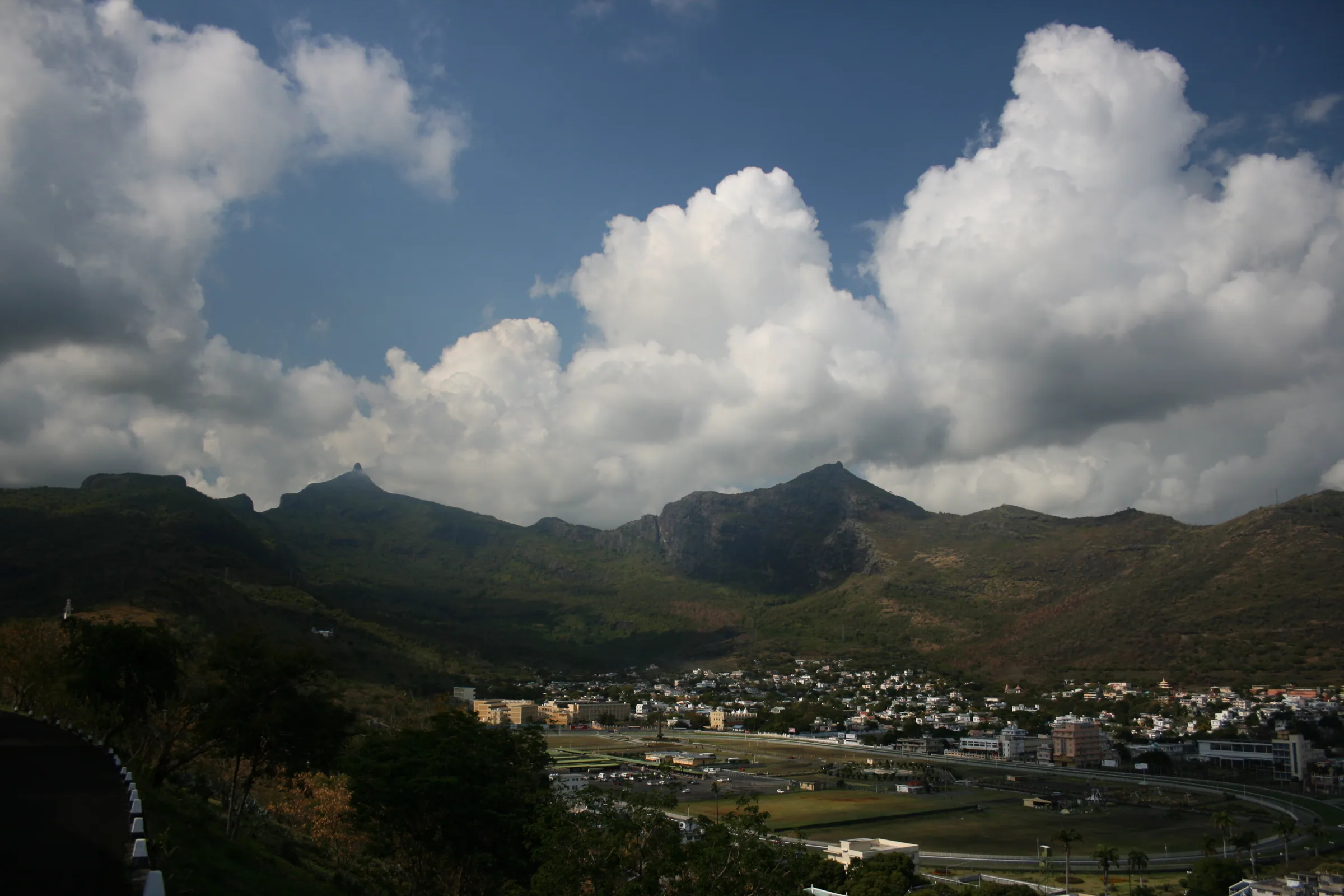
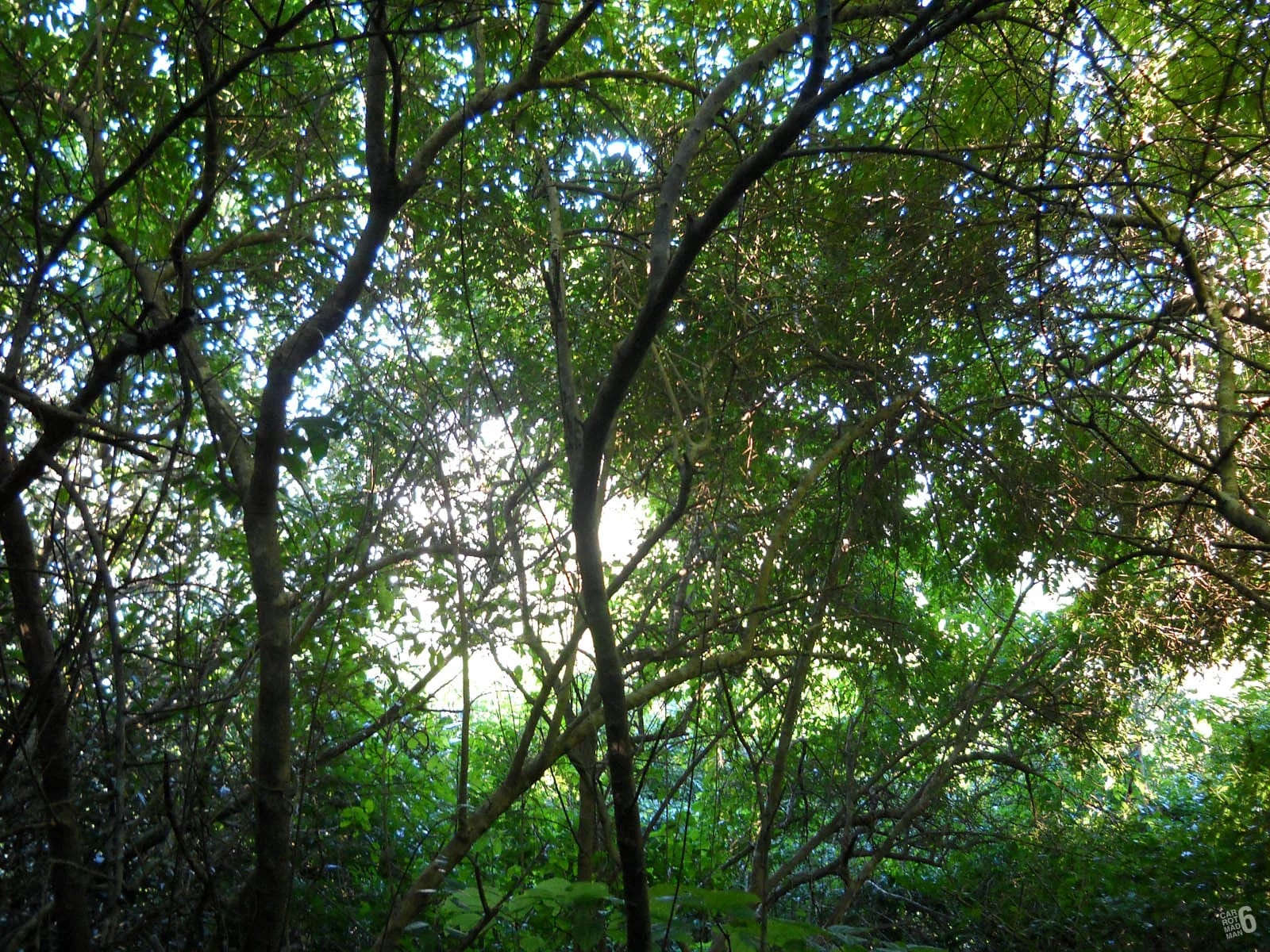
On the north-western flank of Le Pouce, inside a reserve of 0.69 km² declared in 1951, survives the only significant patch of native cloud forest left in the Moka Range. It holds some of the rarest plants on earth, including a screwpine known from just two individuals, and it is under constant pressure from guava, monkeys and litter. This page explains what lives there, what threatens it and how a visitor can avoid adding to the damage.
Read the guide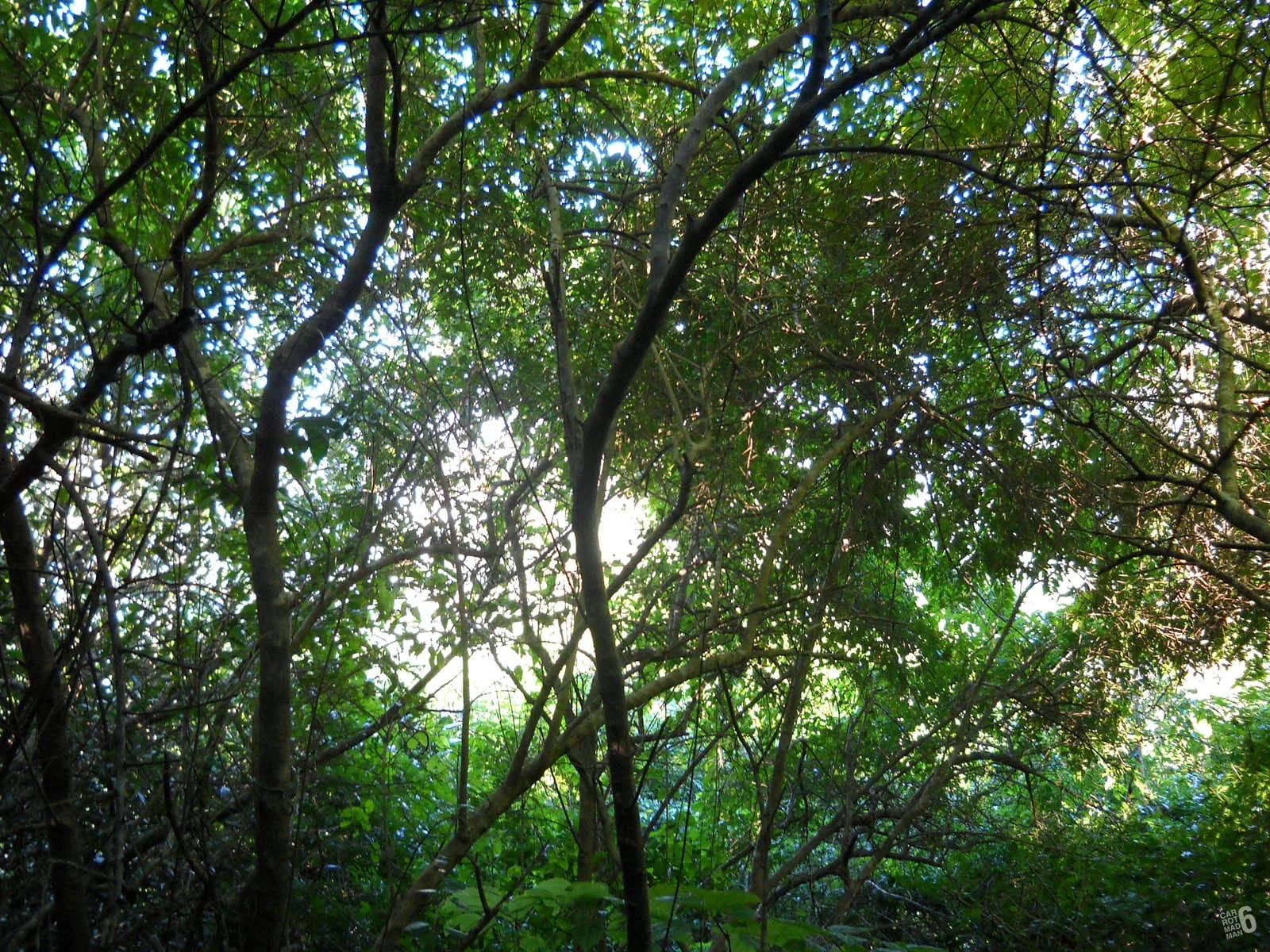
A small reserve on the north-west flank
Le Pouce Nature Reserve covers 0.69 km², about 69 hectares, on the north-western side of the mountain above Port Louis. It was declared in 1951 together with two other small reserves, Cabinet at 0.18 km² and Perrier at 1.75 hectares, and it is now listed in the Second Schedule of the Forests and Reserves Act of 1983, which places it under the Forestry Service. Protected Planet records it under the identifier 5044. A 2003 amendment to the Act allows the authorised officer to restrict access to any nature reserve, though no closure notice for Le Pouce has been found for 2023 to 2026 and the paths remain open.
The reserve sits inside a far larger Key Biodiversity Area, the Moka Mountains, which covers 79.59 km² from 20 m to 823 m above sea level along the main ridge and its three northern spurs. Only about half a percent of that area is formally protected, in Le Pouce Nature Reserve and in the Moka Mountain Reserves that guard the water catchments above Port Louis and Notre-Dame. The rest of the range is exotic scrub, grassland and eucalyptus plantation, used for hunting, water, conservation and tourism.
Why there is a cloud forest here
The Moka Range is drier than the forests of the south-west and the east, with annual rainfall mostly between 1,000 and 2,000 mm. Native forest survives on Le Pouce because the summit catches cloud. The highest peaks receive extra moisture from the cloud that sits on them, condensing on leaves and dripping to the ground, and that extra water keeps a wet, mossy forest alive on the upper north-western slopes while the ridges around it have gone to guava and grass.
The same cloud is what hides the view on a bad morning. If you reach the summit inside it, you are standing in the reason the reserve exists, and the trees below you on the Port Louis side are drinking from it.
The rarest plants
The flagship is Pandanus pseudomontanus, the Le Pouce Mountain screwpine. Only two individuals are known in the world, both male, both in the reserve. The botanist Joseph Guého first recorded the species in 1968, when the plants stood about 1.5 m tall. They are now stunted, no flowering has been seen since 1968, and swellings noted in 2011 raised brief hopes. The IUCN has provisionally classed it as Critically Endangered but it has not yet been formally added to the Red List. With no female plant known, the species cannot reproduce on its own.
Around it the 2011 survey found a handful of other very rare natives. Five Elaeocarpus bojeri, whose fruit had to be bagged to keep monkeys off it. A tambalacoque with machete marks on its trunk. Cylindrocline commersonii, a shrub of the daisy family found only close to the summit. Nesocodon, a plant that is the only species in its genus and is otherwise known from Grand Peak, the Chamarel falls and the Trois Mamelles. Three of the island’s four endemic everlastings, the immortelles. Lobelia serpens var. cheiranthifolia, reduced to about three colonies and roughly a hundred plants. Liane Rousseau was found flowering on bois maigre.
| Plant | Found on Le Pouce | Note |
|---|---|---|
| Pandanus pseudomontanus | Two plants, both male | No flowering since 1968; stunted; provisionally Critically Endangered |
| Elaeocarpus bojeri | Five plants | Fruit bagged against macaques |
| Tambalacoque | Present, damaged | Machete marks on the trunk |
| Cylindrocline commersonii | Near the summit only | Shrub of the daisy family |
| Nesocodon | Present | Only species in its genus; also Grand Peak, Chamarel and Trois Mamelles |
| Endemic everlastings | Three of four species | The immortelles of Mauritius |
| Lobelia serpens var. cheiranthifolia | About three colonies, roughly 100 plants | Declining |
What the 2011 survey found
In 2011 the botanists Vincent Florens and Claudia Baider surveyed the reserve, and Le Mauricien reported their good and bad surprises in January 2012. The good news was that the rarest plants were still there, that Liane Rousseau was flowering and that the screwpines showed swellings. The bad news filled more of the report. Jamrosa, Syzygium jambos, and the climbing liane cerf, Hiptage benghalensis, were spreading through the native canopy. Eucalyptus planted at Anse Courtois was still standing inside the reserve. Macaques were eating the fruit of the rarest trees before it could ripen. Campers had cut trees. And litter was everywhere, enough for the summit to be nicknamed Bottle Mountain.
Their conclusion was blunt. Reserve status on its own does not stop polluters or vandals. Fifteen years on, that remains the fairest one-line summary of the reserve’s situation, and it is why this page ends with what visitors can do rather than with a list of species.
Guava, jamrosa, liane cerf and the rest
Walk up from Petit Verger and most of what you pass is not Mauritian. The slopes are overgrown with Chinese guava, Psidium cattleianum, the single most troublesome invasive plant in Mauritian forest restoration, which forms dense thickets that shade out native seedlings and whose fruit is readily spread by animals. Acacia, jamrosa and planted eucalyptus fill much of the rest, with introduced palms lower down. Liane cerf climbs into the canopy and smothers it.
In the Key Biodiversity Area assessment, exotic scrub, grassland and eucalyptus dominate the whole range, and the native cloud forest of the reserve is the exception that the rest of the mountain has already lost. Below the mountain the picture is agricultural rather than wild, with cauliflower fields and a stream with ducks at the base of the Petit Verger route.
The monkeys
The monkeys you will almost certainly meet are long-tailed macaques, Macaca fascicularis, descended from animals brought by the Dutch around 1602, probably as pets. The wild population across the island is estimated at 25,000 to 35,000. They are a serious conservation problem on Le Pouce because they eat the fruit of the rarest trees before it ripens, which is why botanists bag the fruit of Elaeocarpus bojeri.
For walkers they are mostly a spectacle. Hikers on the Petit Verger side describe them coming close but not pushy, and the troop at the Hindu temple on the northern route is used to people. Do not feed them, keep food inside your bag and do not leave a bag unattended on the shoulder while you go up the spur.
Birds, geckos and bats
The Moka Mountains are an Important Bird Area, and the species that qualifies them is a small one, the Mauritius grey white-eye, Zosterops mauritianus, a sociable endemic of the forest edge. The bigger story is the Mauritius kestrel. Reintroduced to the range in the early 1990s, mainly in the Anse Courtois valley on the north-western side of Le Pouce, it was expected to spread across the Moka Range, and kestrels have since adapted to both the Bambous and the Moka mountains. Seeing one is luck, not a promise. The Mascarene swiftlet hunts insects over the ridges. The Mascarene paradise flycatcher, by contrast, has not been recorded here since 1975 and is considered locally extinct.
On sunny rocks and tree trunks look for the endemic day geckos, Phelsuma guimbeaui and Phelsuma cepediana, small and brightly coloured. A free-tailed bat, Mormopterus acetabulosus, probably roosts in the range. There are no venomous snakes and no large predators anywhere in Mauritius, so the wildlife risks on Le Pouce come down to mosquitoes on the shadier northern route and the occasional bold monkey.
Bottle Mountain, and what visitors can do
The litter problem is real and it is old. The 2011 survey described the summit as Bottle Mountain, and anyone who climbs on a Sunday afternoon will see why. Campers have cut trees, fruit has been taken from the rarest plants and informal shortcuts have been worn into the slopes. None of this needs a ranger to fix. It needs the people who climb the mountain to treat it as theirs, which it is.
- Carry down everything you carry up, including fruit peel and cigarette ends, and pick up a bottle on the way if you can.
- Stay on the waymarked path. Informal shortcuts trample seedlings and open the ground to guava.
- Do not pick, cut or carve anything. The tree with machete marks in the survey was a tambalacoque.
- Do not feed the monkeys. Fed monkeys become bold monkeys, and bold monkeys raid the bags of the next hikers.
- Do not light fires or cut wood. Cutting by campers is one of the documented threats to the reserve.
- Leave fruit on the native trees. Every ripe fruit is a chance at a seedling the reserve badly needs.
Questions people ask
Is Le Pouce a nature reserve?
Part of it is. Le Pouce Nature Reserve covers 0.69 km² on the north-western flank and has been protected since 1951 under the Forestry Service. The summit paths from Petit Verger and from Port Louis are open, no permit or fee is required, and no closure notice has been found for recent years. The reserve protects the only significant native cloud forest in the Moka Range.
Are there monkeys on Le Pouce, and are they dangerous?
Yes, long-tailed macaques, introduced around 1602 and now numbering 25,000 to 35,000 across the island. Hikers describe them as close but not pushy on the Petit Verger route, and a troop lives near the Hindu temple on the northern route. They are not dangerous if you do not feed them or leave food within reach. Keep your bag closed and do not hand them anything.
Can I see the Mauritius kestrel on Le Pouce?
Possibly. The kestrel was reintroduced to the Moka Range in the early 1990s, mainly in the Anse Courtois valley on the north-western side of Le Pouce, and has adapted to these mountains. A sighting is a matter of luck on any given morning, and this guide makes no promise. Watch the forest edge and the rock faces, and listen for the grey white-eyes, which are far more common.
Are there snakes on Le Pouce?
There are no venomous snakes and no large predators anywhere in Mauritius, so there is nothing on the mountain that will hurt you deliberately. The animals you are most likely to meet are macaques, day geckos and birds. The practical wildlife nuisance is mosquitoes, mostly on the shadier northern route from Port Louis.
What is the rarest plant on Le Pouce?
Pandanus pseudomontanus, the Le Pouce Mountain screwpine. Only two individuals are known anywhere, both male and both in the reserve, first recorded in 1968 and not seen to flower since. Without a female plant it cannot reproduce naturally. Several other species on the mountain are also critically endangered, including Elaeocarpus bojeri, of which five plants were found in 2011.
Why is Le Pouce called Bottle Mountain?
Because of the litter. Botanists surveying the reserve in 2011 described the summit as Bottle Mountain, and local reporting repeated the nickname. Plastic bottles are the most visible waste left by walkers on the thumb and the shoulder. The fix is simple and personal: carry everything down and, if you can, pick up a bottle that is not yours.
Can I camp on Le Pouce?
This guide found no published rule either way. The reserve is protected under the Forests and Reserves Act, the authorised officer may restrict access, and the 2011 survey recorded campers cutting trees as one of the threats to it. If you do spend a night on the shoulder, bring everything you need, light no fire, cut nothing and leave no trace. Most people are better served by a dawn start from the car park.
Plan a light-footed climb
The what-to-bring page is a short, honest kit list for two to four hours on an exposed tropical mountain, with room for a litter bag.