
How hard is Le Pouce?
The honest answer is that Le Pouce is two hikes. The first, from the Petit Verger car park to the grassy shoulder at about 625 m, is an easy to moderate walk that fit children manage. The second, the final hundred metres up the thumb, is a steep scramble in a narrow trench with a rock step and open air to one side. Most people who find Le Pouce harder than expected were told about the first hike and not the second.
Read the guide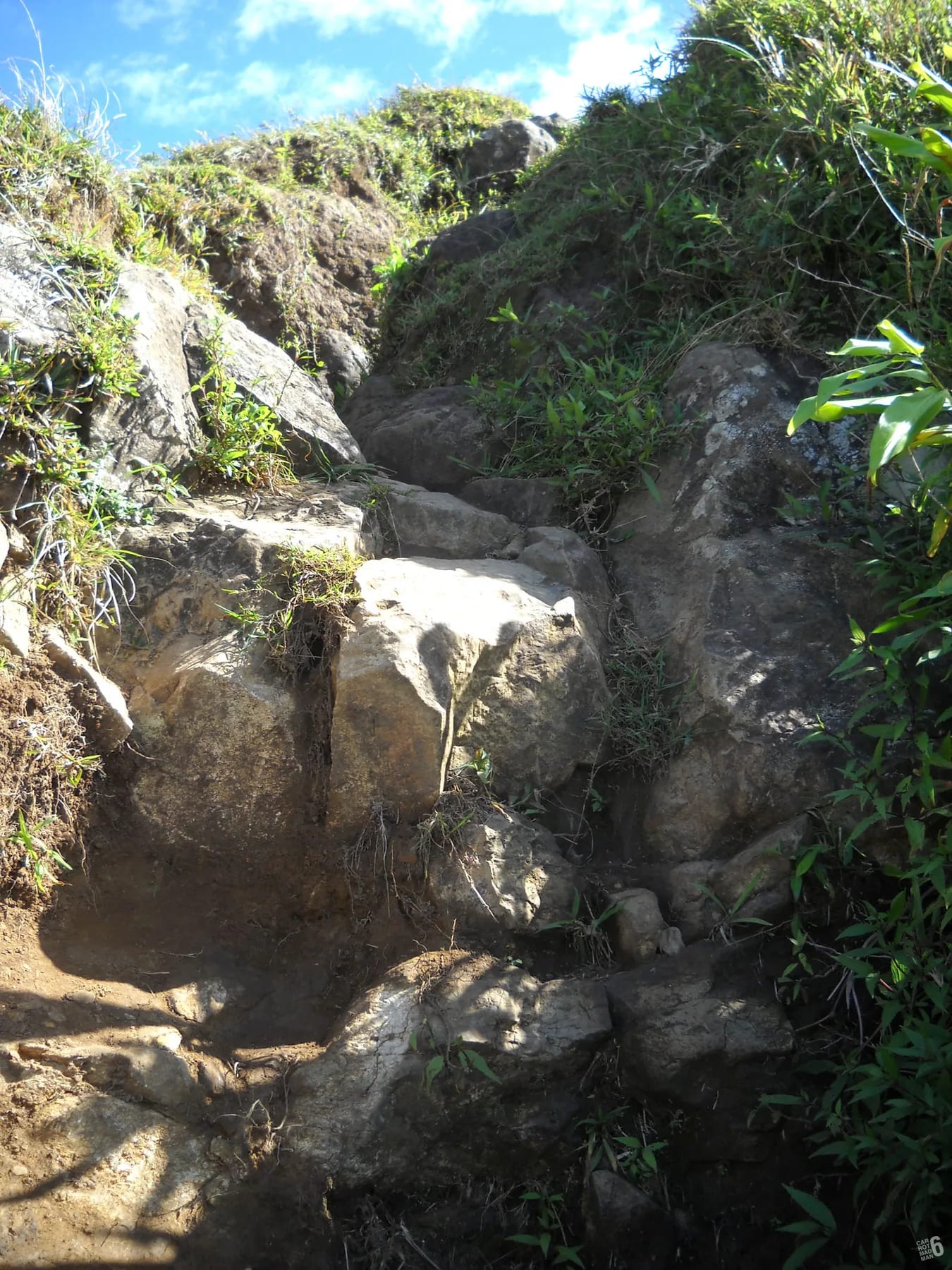
Why “easy” misleads beginners
Le Pouce appears on almost every list of easy hikes in Mauritius, and the label is not wrong for most of the distance. The farm track is a stroll, the forest path is a steady uphill walk, and the shoulder is a meadow. One hiking guide rates the whole thing easy to moderate, another easy to medium, and a hotel blog calls it simply easy. The peak databases are more cautious. PeakVisor grades the trail T2 on the Swiss hiking scale, which means a mountain path that needs sure footing, and the Hiking Project community rates the southern route Difficult, mainly because of the finish.
The problem is that the labels describe different parts of the mountain. A visitor who reads easy and arrives in sandals, with a litre of water and no idea that the last section needs hands, has been let down by the word rather than by the mountain. This page grades the hike in five separate ways, effort, ground, navigation, exposure and weather, so that you can judge it against your own experience rather than against a single adjective.
How much effort the climb takes
The mapped route gains about 390 m over 2.05 km from the car park, which is a steady climb rather than a brutal one. The Hiking Project recording puts the average grade at 16 percent and the steepest at 35 percent. Most of that climbing is packed into the 700 m or so of forest switchbacks between the kiosk at about 437 m and the shoulder at about 625 m, where the path gains roughly 190 m. Most walkers reach the shoulder in under an hour and are pleasantly surprised by how quickly it came.
Effort, then, is moderate. Anyone who walks briskly for an hour without trouble will manage the approach, though the heat on the open cane track in summer and the humidity under the trees make it feel harder than the numbers suggest. Start early, carry 1.5 litres of water per person and the effort grade stays honest. The northern route from Port Louis is a different matter, with about 690 m of ascent over 3.6 km, and it belongs in the moderate to hard bracket for effort alone.
The ground underfoot and the final scramble
Below the shoulder the surface is a mix of basalt, roots and red clay, with a few rock cuts where the path has been dug into the slope. It is uneven and slippery after rain but never technical. The thumb is another matter. The path narrows into a trench worn along the ridge for about 30 m, then arrives at a rock step where you will use your hands for a few metres. One Moka-side recording rates the final 100 m steep and slippery, and the community description on the Hiking Project speaks of scrambling over rocky ledges and catwalks with significant exposure.
In climbing terms this is an easy scramble. Nobody needs a rope, a harness or any experience of rock, and that is the clearest difference from Pieter Both next door, where the summit boulder is climbed with ropes on fixed iron spikes. What the thumb does need is three points of contact on the step, a willingness to face into the rock on the way down, and the sense to leave it alone when the rock is wet. The holds are polished by years of boots, which makes them smooth as well as obvious.
Exposure, and who should stop at the shoulder
Exposure means being somewhere a slip would have consequences, and Le Pouce has two such places. The trench along the ridge has rock on both sides but the ground drops away beyond them, and the summit platform itself is small, with edges you should not approach standing up. A local newspaper report on a school ascent noted that the summit is small enough that people should stay seated, and the Hiking Project description says it is comfortable for about six and uncomfortable above ten.
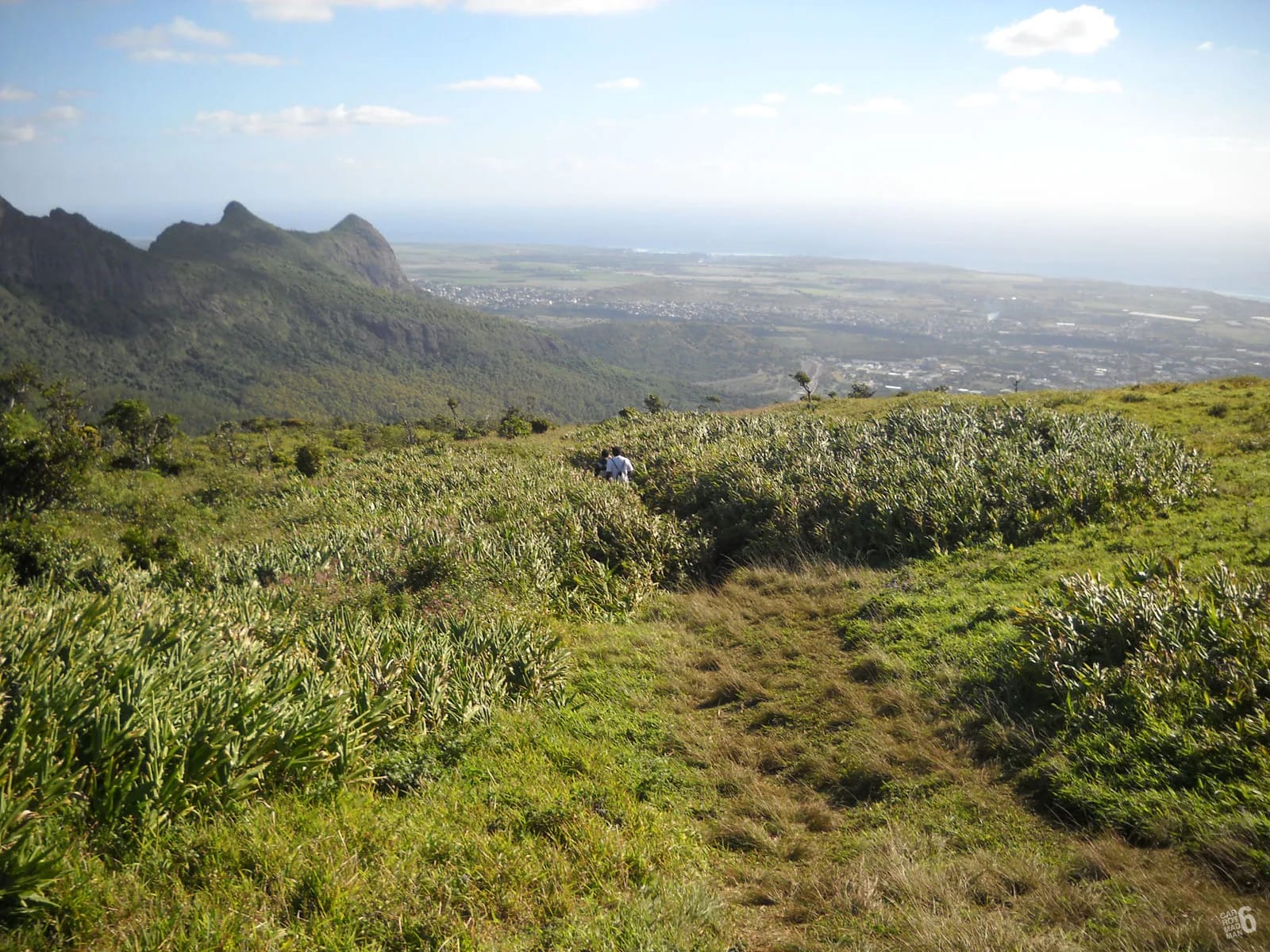
If heights make you freeze, the local guide’s advice is blunt and correct. Anyone who suffers from vertigo should abstain from the final section. The shoulder at about 625 m is a fine viewpoint, with Pieter Both, Port Louis and the plateau in view, and you lose very little by stopping there while your companions go on. Nobody should feel pressured to finish, and a group that agrees this in the car park has a better morning than one that argues about it on the thumb.
How weather changes the grade
On a dry, calm morning the summit finish is a short scramble that most agile adults enjoy. In wind, cloud or rain it becomes a different outing. The summit is breezy on most days and hikers report strong wind near the top, where the trench and the exposed platform feel it most. Morning fog has made the final section slippery enough to be reported in the local press, and the descent through the forest after rain is a mud slide in places. The clay soil holds water long after the sky clears.
The practical rule is to decide at the shoulder, not at the car park. If the thumb is in cloud, if you can hear the wind on the ridge or if the rock is wet, the grade has moved from moderate to serious and the summit will still be there another day. The cooler, drier months from May to November give the most reliable conditions, and early mornings beat afternoons in every month.
Who the hike suits, and how it compares
Le Pouce suits regular walkers who want a real summit without ropes or a guide, families with children of about 8 and over who are used to walking, and anyone staying in Port Louis, Moka or the north with a free morning. Guided tours set a minimum age of 10, and one operator advises against the hike for people with back problems or serious heart conditions and during pregnancy. It is a poor choice for a first ever hike in brand new shoes, for anyone who cannot abide heights, or for a rainy afternoon.
Against the island’s other famous climbs it sits in the middle. Le Morne Brabant, at 556 m, is lower, but its upper section is managed and guided by the Le Morne Heritage Trust Fund and is exposed for longer. Pieter Both, at 820 m, is only slightly higher, but its summit boulder is a roped climb that most visitors do with a guide. Lion Mountain in the south-east is lower again at about 480 m, yet steeper for its height, with an exposed ridge and no waymarks. Le Pouce is the one you can walk up with a friend on a Saturday and still call a mountain.
| Mountain | Height | Summit finish | Guide or rope |
|---|---|---|---|
| Le Pouce | 812 m | Short scramble in a trench, hands needed | Neither required |
| Pieter Both | 820 m | Roped climb up a balanced boulder on iron spikes | Rope and guide usual |
| Le Morne Brabant | 556 m | Exposed upper section on a managed route | Guided upper section |
| Lion Mountain | About 480 m | Steep, exposed ridge, unmarked | Neither required |
| Piton de la Petite Rivière Noire | 828 m | Forested plateau walk | Neither required |
Questions people ask
Is it easy to climb Le Pouce?
Most of the route is easy to moderate, a steady walk on a waymarked path to a grassy shoulder at about 625 m. The last hundred metres up the thumb are steep and narrow, with a rock step that needs hands and some exposure. Fit, regular walkers manage the whole thing in 2 to 3 hours. Beginners should expect to work harder than the word easy suggests, and should feel free to stop at the shoulder.
Is Le Pouce harder than Le Morne?
They are hard in different ways. Le Pouce is higher at 812 m but its difficulty is concentrated in one short scramble at the top. Le Morne is lower at 556 m but its upper section is exposed for longer and is guided and managed by the heritage trust. If you cope with a brief rock step and a narrow ridge, Le Pouce is the easier mountain. If sustained exposure bothers you less than scrambling, Le Morne may suit you better.
Do you need to rock climb on Le Pouce?
No. The rock step on the thumb is a scramble of a few metres where you use your hands for balance, and nobody carries ropes or harnesses. That is the key difference from Pieter Both, whose summit boulder is climbed on fixed iron spikes with a rope. If you can climb a steep garden wall with hands and feet, you can manage the step in dry weather.
Can I do Le Pouce if I am afraid of heights?
You can do most of it. The approach has no exposure and the shoulder at about 625 m is a safe, open meadow with a view of Pieter Both and Port Louis. The trench and the summit platform are the parts that trouble people with vertigo, and the local guidance is to stop below them. Tell your companions in advance, enjoy the shoulder and let them go on.
How does Le Pouce compare with Pieter Both?
Le Pouce is the walk and Pieter Both is the climb. They are almost the same height, 812 m against 820 m, and stand a few kilometres apart in the Moka Range. Le Pouce needs good shoes and a steady head for one short scramble. Pieter Both needs a rope, a guide and a tolerance for a genuinely exposed boulder. Do Le Pouce first and decide about its neighbour from the shoulder.
Is Le Pouce suitable for children?
Children of about 8 to 10 who are used to walking manage the approach without trouble, according to local guidance, and guided tours set a minimum age of 10. The final scramble is the judgement call. Many families stop at the shoulder with younger children while one adult goes on with the older ones. Keep children close on the thumb and sitting down on the summit.
Walk the route stage by stage
The hike page describes every section from the car park to the summit, with the map and elevation profile.