
What to bring on Le Pouce
Le Pouce is a two to four hour outing on an exposed central mountain with no water, little shade above the forest, a windy summit and a finish that needs your hands. The kit list is short, and most of it is about water, grip and the sun. This page gives the list, explains the few items people argue about, and shows what changes with the season.
Read the guide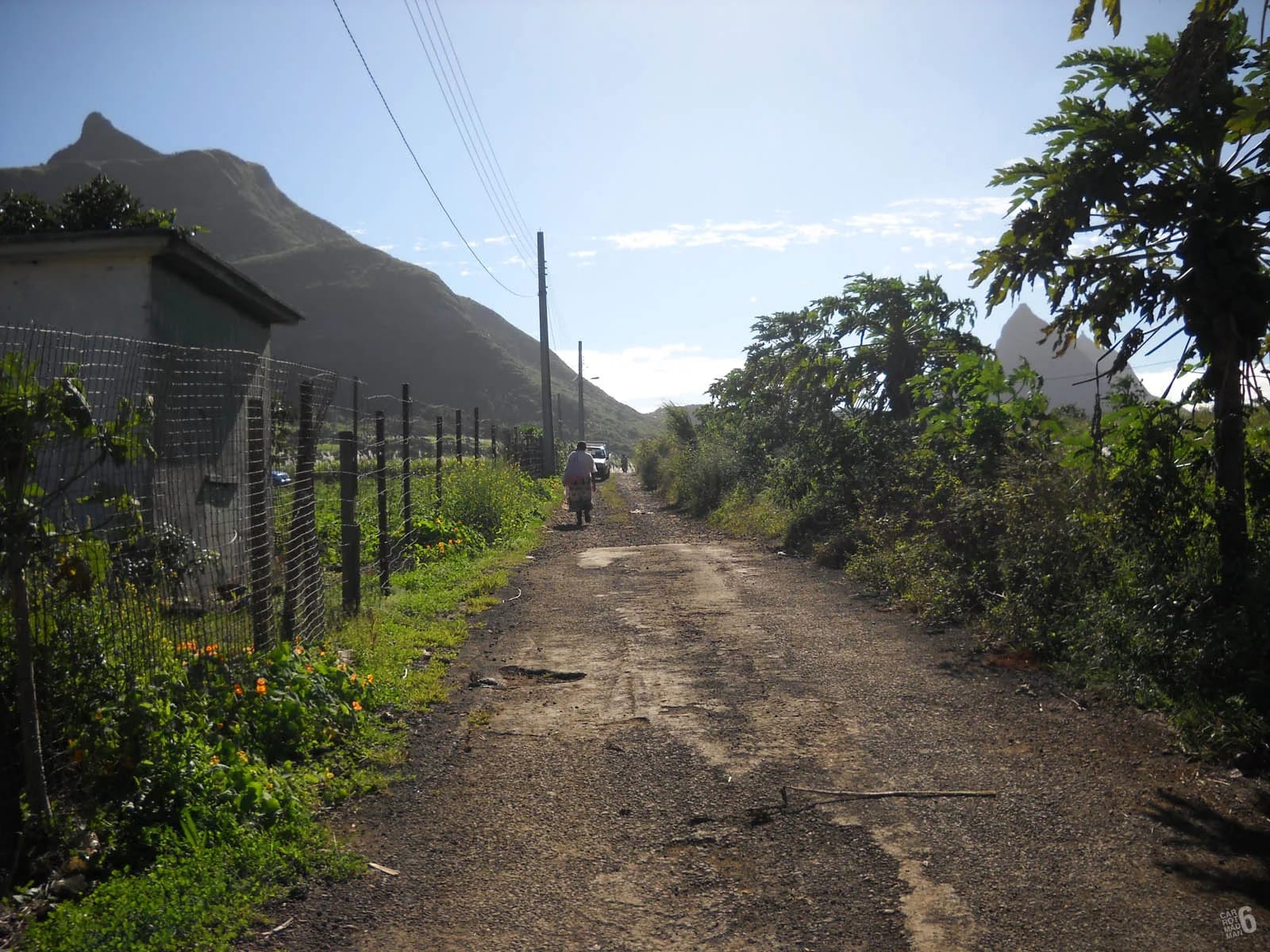
The short list
Everything below fits in a small daypack and weighs a few kilograms with the water. Nothing on the list is specialist. The point is to carry each item for the reason given, so that you can judge for yourself what to leave out on a cool, clear winter morning.
That is the whole list. A camera, poles and a change of shirt are personal choices, discussed below.
- 1.5 to 2 litres of water per person, more in summer or if you plan to sit on the shoulder for an hour.
- Shoes with a grippy sole that you can scramble in. Trail shoes or light boots, not sandals or worn trainers.
- Sun protection. A hat with a brim, sunscreen applied before you start, and sunglasses for the open shoulder.
- A light wind layer for the summit.
- A light rain layer or a packable jacket in the wet season.
- A headlamp for any dawn start, even if you expect to be down in daylight.
- A phone with the GPX route and an offline map loaded, charged, in a zipped pocket.
- Insect repellent if you start from Port Louis.
- A small first aid kit. Plasters, a bandage for a sprain, tape and any personal medication.
- A snack. Something salty and something sweet is enough for a morning.
Water, and why 1.5 to 2 litres
No source describes any water on either route, and hikers who have done it carry about two litres. The climb from Petit Verger is only about 2 km, but it rises 390 m, most of it in the open, and the summit is routinely windy, which dries you out faster than you notice. Local advice gives 1.5 litres per person as the minimum, and that is right for a cool, cloudy winter morning. In summer, from November to April, when daytime highs at the coast reach 29 °C in January and February, carry 2 litres and drink on the way up, not just at the top.
There is no shop at the car park, which is the end of a farm road through the cane. Fill up in Moka or Saint-Pierre before you arrive, or at your accommodation. If you start from Tranquebar for the long Port Louis route, with about 690 m of ascent over 3.6 km, take 2.5 to 3 litres or plan to buy more at the end.
Shoes with grip for wet basalt and mud
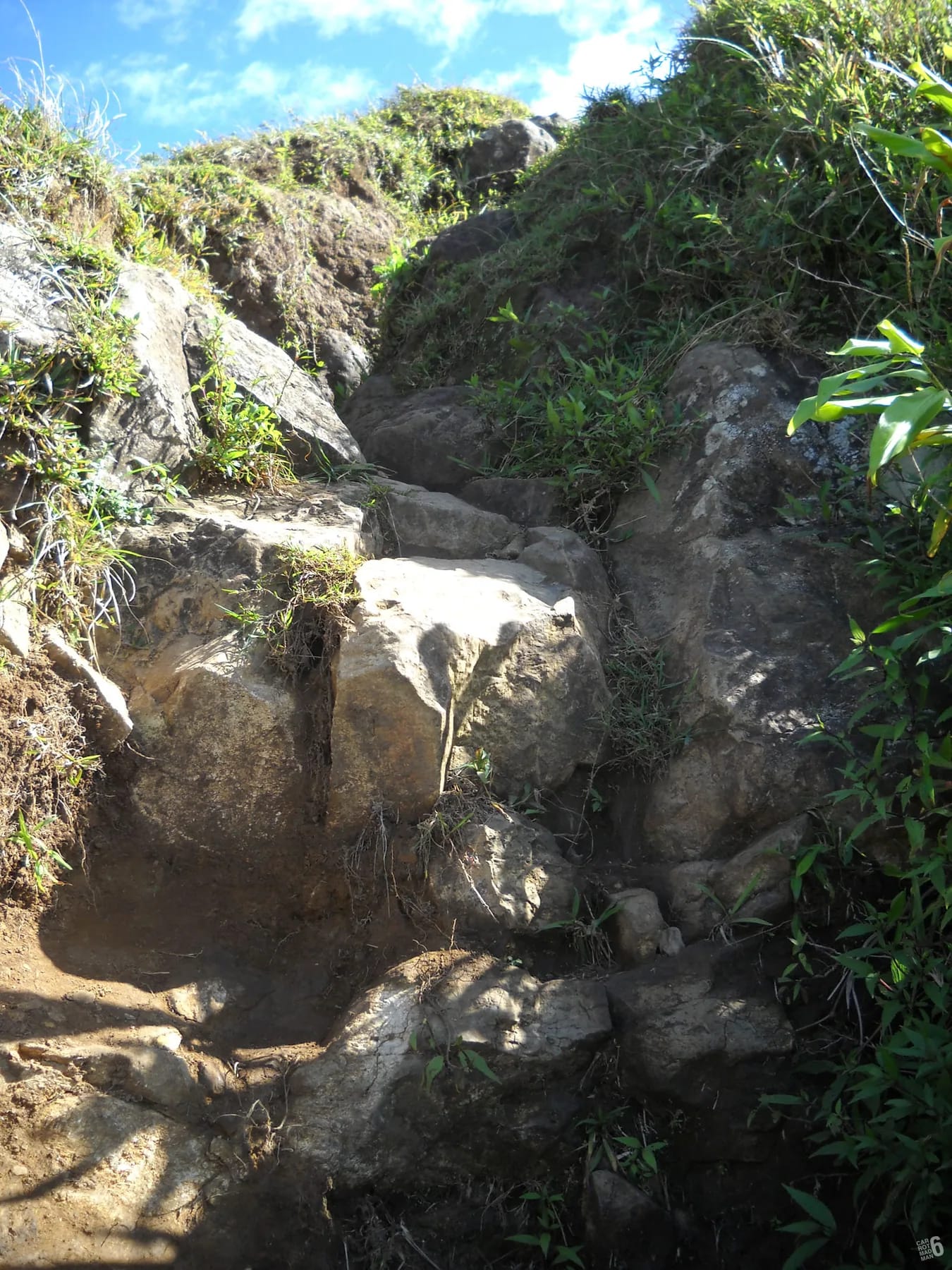
The surface is weathered basalt and clay. In dry weather the lower path is a farm track and a stony forest trail that any trainer copes with. The problem is everything else. After rain the forest section turns to mud, the rock on the final spur polishes under boots, and the descent of the Saint-Pierre side becomes the place where ankles go. The stretcher evacuation of August 2026 was a sprain on that descent.
Trail shoes with a lugged sole are the best compromise. They grip mud, they are light enough for the scramble and they dry quickly. Light boots are fine if you prefer ankle support. Sandals, flat-soled fashion trainers and anything with a smooth sole belong in the car. If your shoes are new, walk in them for a day first. The final rock step needs confidence in your feet more than anything else.
Sun, wind and a light rain layer
Above the forest the route is open all the way to the summit, and from the shoulder onwards there is no shade at all. The sun in Mauritius is strong even in winter and fierce in summer, and most of the climb from the kiosk upwards faces it. A hat with a brim does more than sunscreen on its own, and both together are the standard. Apply sunscreen at the car, because you will not stop to do it on the switchbacks.
The summit sits clear of its neighbours and catches the trade wind. Hikers describe it as breezy on good days and windy on most, with sudden gusts near the top. A light windproof layer, the kind that packs to the size of a fist, turns a cold, hurried summit into a comfortable one and is worth carrying in every month. On winter mornings, June to September, when night temperatures at sea level drop to about 16 °C and the summit is several degrees colder, add a thin fleece for the dawn.
Rain comes suddenly on the mountain and the wettest months are February and March. A packable rain layer is light insurance in the wet season and can be left behind on a settled winter day. Do not carry an umbrella. It is useless in wind and dangerous on the scramble.
Headlamp, phone and offline map for dawn starts
A sunrise hike means leaving the car park in the dark, and the forest switchbacks are not a place for a phone torch held in one hand. A headlamp leaves both hands free for the rock, which matters on the final spur, and it costs almost nothing in weight. Carry one on any dawn start and on any afternoon start too, because dusk here lasts about twenty minutes and sunset in winter is around 17:40.
Your phone should carry the GPX route from this site and an offline base map, downloaded before you leave your accommodation. Coverage on the ridges is reasonable but not reliable at every fork in the forest. Start with a full battery, keep the phone in a zipped pocket rather than in your hand, and consider a small power bank if you plan to navigate and photograph for four hours. Save the emergency numbers, 999 or 112 for the police and 114 for an ambulance, where you can find them without thinking.
Repellent, first aid and the small things
Mosquitoes are a feature of the Port Louis route, where the trail climbs through woods past Le Dauguet and the temples, and hikers who have done the long loop describe them as numerous. Repellent is worth carrying there and optional on the open Moka side. There are no venomous snakes or large predators in Mauritius, so the wildlife list is short. Monkeys are seen close to the path on the Petit Verger route and at the temple on the north side. They are not pushy, but keep food inside the pack rather than in your hand.
A small first aid kit should cover the two things that actually happen here, a twisted ankle and a scraped hand on the rock. A crepe bandage, a few plasters, tape and painkillers are enough. Add a whistle if you have one. A light pair of gloves helps some people on the final rock step, especially when it is cold or wet, and poles help on the muddy forest descent but must be stowed before the scramble.
What to leave behind
Weight is less of a problem on Le Pouce than distraction and loss. The recorded robberies on the Tranquebar side, and the general sense of a quiet hill at the edge of a capital city, argue for carrying little of value.
- Passports, spare bank cards and jewellery. Leave them locked away at your accommodation.
- Large amounts of cash. Carry enough for a drink and a taxi.
- Anything visible in the parked car, on either side of the mountain.
- Flip-flops, sandals and smooth-soled trainers.
- An umbrella, which is useless in the summit wind.
- Glass bottles, and anything you are not prepared to carry back down. Litter on the mountain is a documented problem in the reserve.
- A speaker. The summit is small and shared.
What changes with the season
Mauritius has two seasons rather than four. The Meteorological Services describe a warm, wet summer from November to April with a mean of about 24.7 °C, and a cooler, drier winter from June to September with a mean of about 20.4 °C. About two thirds of the rain falls in summer, the wettest months are February and March and the driest is October. The cyclone season runs from November to the end of April, with the official warning window extended to mid May.
| Season | Months | On the mountain | Add to the list |
|---|---|---|---|
| Cool dry season | May to October | Clearest mornings, cool dawns, firm ground most days, summit wind | A thin fleece for dawn, otherwise the short list |
| Hot wet season | November to April | Heat on the open slope by mid-morning, afternoon cloud and showers, mud after rain, cyclone warnings possible | A second litre of water, a rain layer, an earlier start and a check of the cyclone bulletin |
| Any dawn start | All year | Dark car park and forest, cold summit until the sun arrives | Headlamp, wind layer, a warm drink for the top |
Questions people ask
How much water should I bring for Le Pouce?
At least 1.5 litres per person, and 2 litres in summer or if you plan a long stop on the shoulder. There is no water on the route and nothing to buy at the car park, which is the end of a farm road. For the long Port Louis route from Tranquebar, with about 690 m of ascent, carry 2.5 to 3 litres. Drink on the way up rather than saving it all for the summit.
Do I need hiking boots for Le Pouce?
Not boots, but you do need grip. Trail shoes with a lugged sole handle the mud in the forest, the polished rock on the final spur and the stony descent. Light boots are fine if you like ankle support. Sandals, flip-flops and smooth-soled trainers are the common mistake and are the reason people slip on the Saint-Pierre descent after rain.
Is there anywhere to buy water or food at the trailhead?
No. The Petit Verger car park is the end of a farm track through sugar cane with a wooden route board and nothing else. Buy what you need in Moka or Saint-Pierre on the way, or bring it from your accommodation. The Port Louis side starts in a city neighbourhood with shops, but once you are above Le Dauguet there is nothing until you come down.
Should I bring walking poles?
They help on the muddy forest switchbacks, especially on the descent, where most sprains happen. They are a nuisance on the final spur, where you need your hands on the rock, so stow them on the shoulder before you climb the thumb. If you only have one pair between two people, give them to whoever has the weaker knees for the way down.
Are there toilets at the Le Pouce trailhead?
No source mentions any at the Petit Verger car park, and visitors should assume there are none. On the Port Louis side, the Le Dauguet sports area about a kilometre above Tranquebar has parking and toilets. Use the facilities in Moka or Saint-Pierre before you drive up to Petit Verger.
Can I bring my dog on Le Pouce?
No source we have found states a rule either way, and the north-western flank is a nature reserve where the Forestry Service can restrict access. If you do bring a dog, keep it on a lead near the monkeys and other hikers, carry extra water for it and remember that the final spur, with its ledges and rock step, is not a place for a dog on a lead or off one.
Now check the sky
The weather page explains cloud on the summit, wind and the months that give the clearest view.