
Things to do near Le Pouce
Le Pouce is a morning mountain, which leaves the afternoon free. Everything on this page lies within roughly 12 km of the Petit Verger car park, from a plantation house ten minutes away to the capital, a botanical garden created in 1770 and a volcanic crater on the plateau. The list is deliberately short, and each entry says plainly what it is, including the one whose current status nobody can confirm.
Read the guide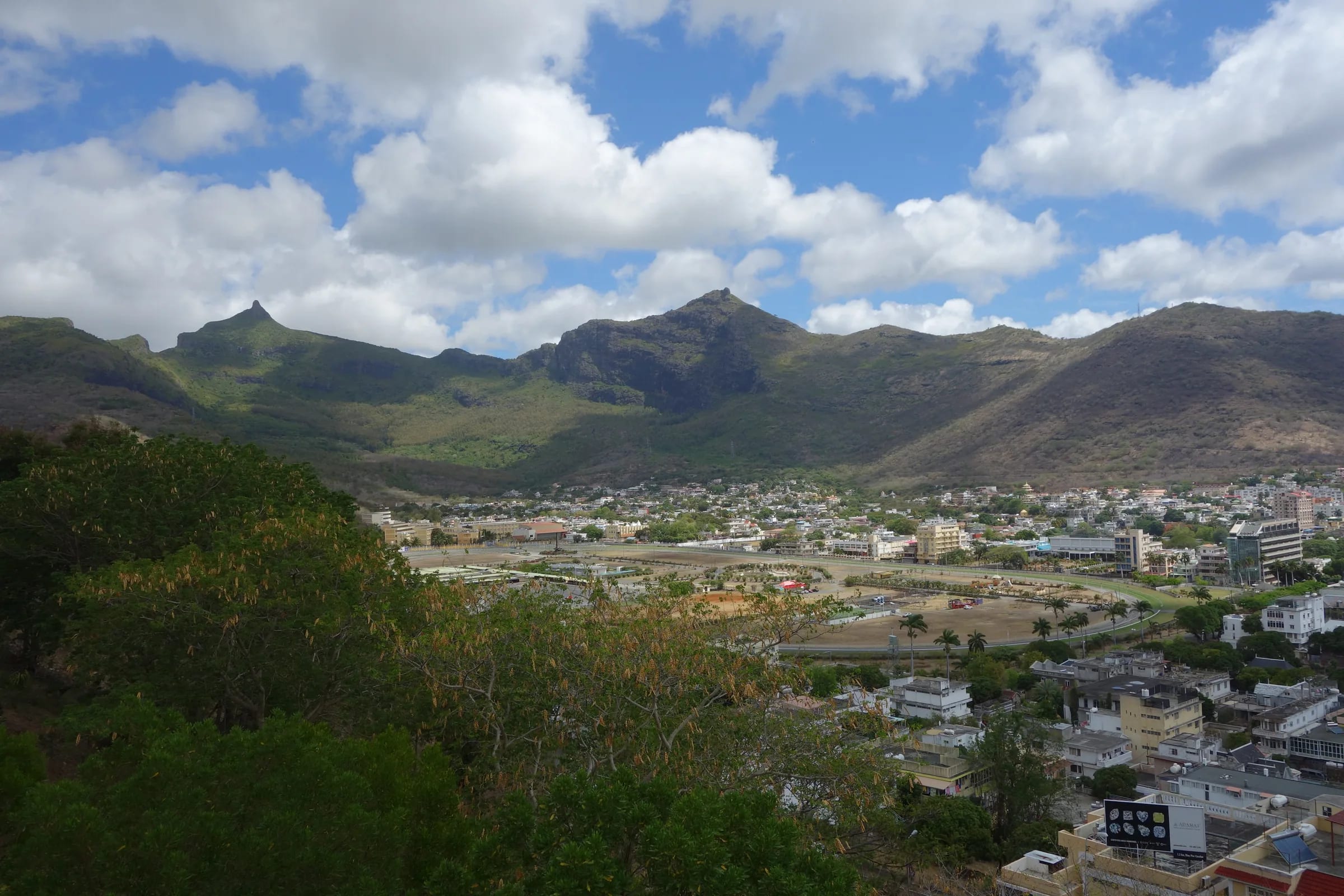
Where everything is, with rough distances
Distances below are straight-line measurements from the Petit Verger car park at 381 m, so road distances are longer, sometimes much longer where the route has to go round the mountain. Drive times are rough estimates for quiet roads. The Port Louis approach in particular slows badly in the morning and evening rush, so check a map app on the day. Everything here can also be reached by bus from Port Louis, with changes, and the bus page explains the two stations.
| Place | Straight line | Rough drive | Time to allow |
|---|---|---|---|
| Eureka House, Moka | About 3.3 km | 10 minutes | 1 to 1.5 hours |
| Bagatelle Mall | About 3.6 km | 10 minutes | As needed |
| Le Réduit gates | About 4.8 km | 15 minutes | 20 minutes, outside only |
| Domaine Les Pailles | About 4.1 km | 15 to 20 minutes | Check its status first |
| Port Louis centre | About 6 km | 20 to 25 minutes | Half a day |
| Pamplemousses garden | About 12 km | 30 to 40 minutes | 2 hours |
| Trou aux Cerfs, Curepipe | About 12 km | 25 to 35 minutes | 30 minutes |
Eureka House, the closest stop
Eureka in Moka is the obvious pairing with the hike. A wooden Creole mansion dated 1830 with 109 doors and windows and 40 rooms, bought by the Leclézio family in 1856 and open as a museum since 1986, it sits ten minutes from the car park on the road most drivers use to reach the B47. The house shows how a sugar family lived, and the garden runs down to small waterfalls on the Moka river.
Opening hours and prices are not given on this site; check with the house before you go. The Eureka page has the full story, and the day plan shows how to fit it between the dawn climb and the capital.
Le Réduit, from the outside only
Le Réduit at Moka is the State House, the official residence of the President of Mauritius. Governor Barthélemy David built a fortified refuge here that was completed in 1749, the present château dates from a rebuilding completed in 1778, and the estate covers about 97 hectares between the gorges of two rivers, with a small memorial, the Temple de l’Amour, added in 1921. It is a significant site and, most of the time, you cannot go in.
The château has traditionally opened to the public on two days a year, in October and March. On any other day the visit is the gates, the avenue and the university quarter next door, where the University of Mauritius has stood since 1965. It is worth the fifteen minutes from the trailhead if you are passing anyway or have timed an open day. Do not build an afternoon around it.
Port Louis in an afternoon
The capital lies about 6 km from the car park in a straight line, 20 to 25 minutes by car on a quiet road and much longer in the rush. For a hiker it is the best half day on this list. The Central Market, in a building of 1839, is the place to eat. Aapravasi Ghat, the immigration depot of 1849 inscribed by UNESCO in 2006, is the place to understand the island. Chinatown lies a couple of blocks north of the market, and the Caudan Waterfront, opened in 1996 on the old docks, is where to end up.
Two things matter especially to someone who has just climbed Le Pouce. The Citadel, Fort Adelaide, built between 1834 and 1840 above the Champ de Mars racecourse of 1812, is the best viewpoint back to the mountain and the place to make sense of the route you took. And the Blue Penny Museum at the Caudan, open since 2001, holds the 1847 Post Office stamps. For conservation the originals are lit only briefly and copies are shown the rest of the time, so do not be surprised, and look also for the 1881 statue of Paul and Virginie by Prosper d’Épinay.
Pamplemousses botanical garden
The Sir Seewoosagur Ramgoolam Botanical Garden at Pamplemousses lies about 11 km north-east of Port Louis and about 12 km from the trailhead in a straight line. Its land was set aside on 8 June 1729, and the garden itself was created by Pierre Poivre after he bought the estate in 1770. It covers about 37 hectares and was renamed in September 1988 after the first prime minister of independent Mauritius.
The long pond of giant water lilies, Victoria amazonica, is the image everyone knows, and the collection includes some 85 varieties of palm. The garden is flat, shaded and slow, the opposite of the mountain, and two hours is about right. Reach it from Port Louis by bus from the northern station at Immigration Square, or by car from Moka in 30 to 40 minutes. If you are coming straight from the hike, the shade makes it a comfortable afternoon.
Trou aux Cerfs crater at Curepipe
Trou aux Cerfs is a dormant volcanic crater in the town of Curepipe on the central plateau, about 12 km south of the trailhead in a straight line. The rim stands at about 605 m, the crater is 300 to 350 m across and about 80 m deep, and experts describe the volcano as dormant without ruling out activity within the next thousand years. It is a drive-up viewpoint rather than a walk, and it suits the end of a day when legs are tired.
The honest comparison with Le Pouce is that the crater rim is about 200 m lower than the summit and the view is of the plateau rather than the capital and the sea. On a clear day the Moka Range stands to the north. Allow half an hour, and expect more cloud up here than on the coast, since the plateau sees only about five to six hours of sunshine a day according to the meteorological service.
Pieter Both, seen rather than climbed
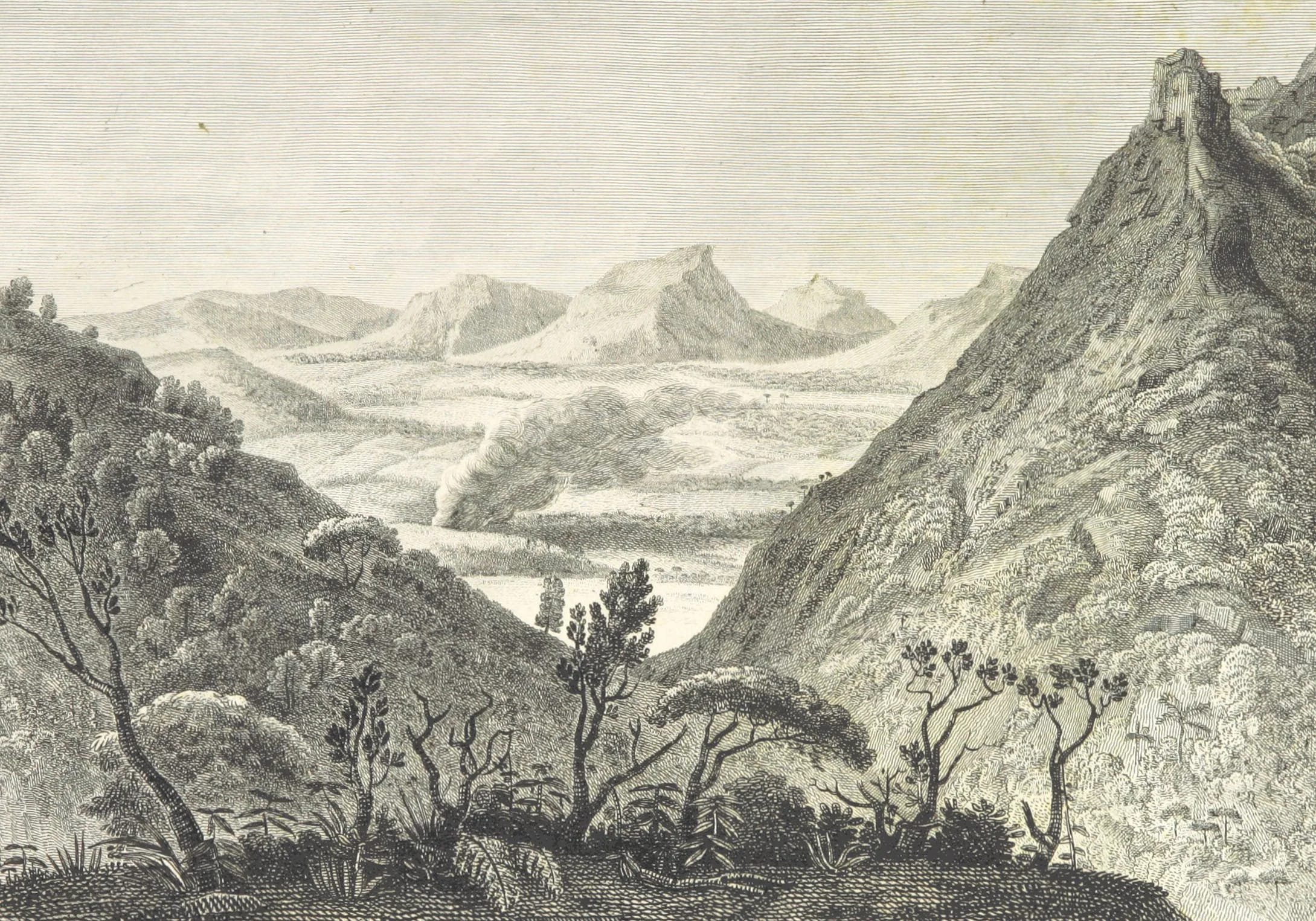
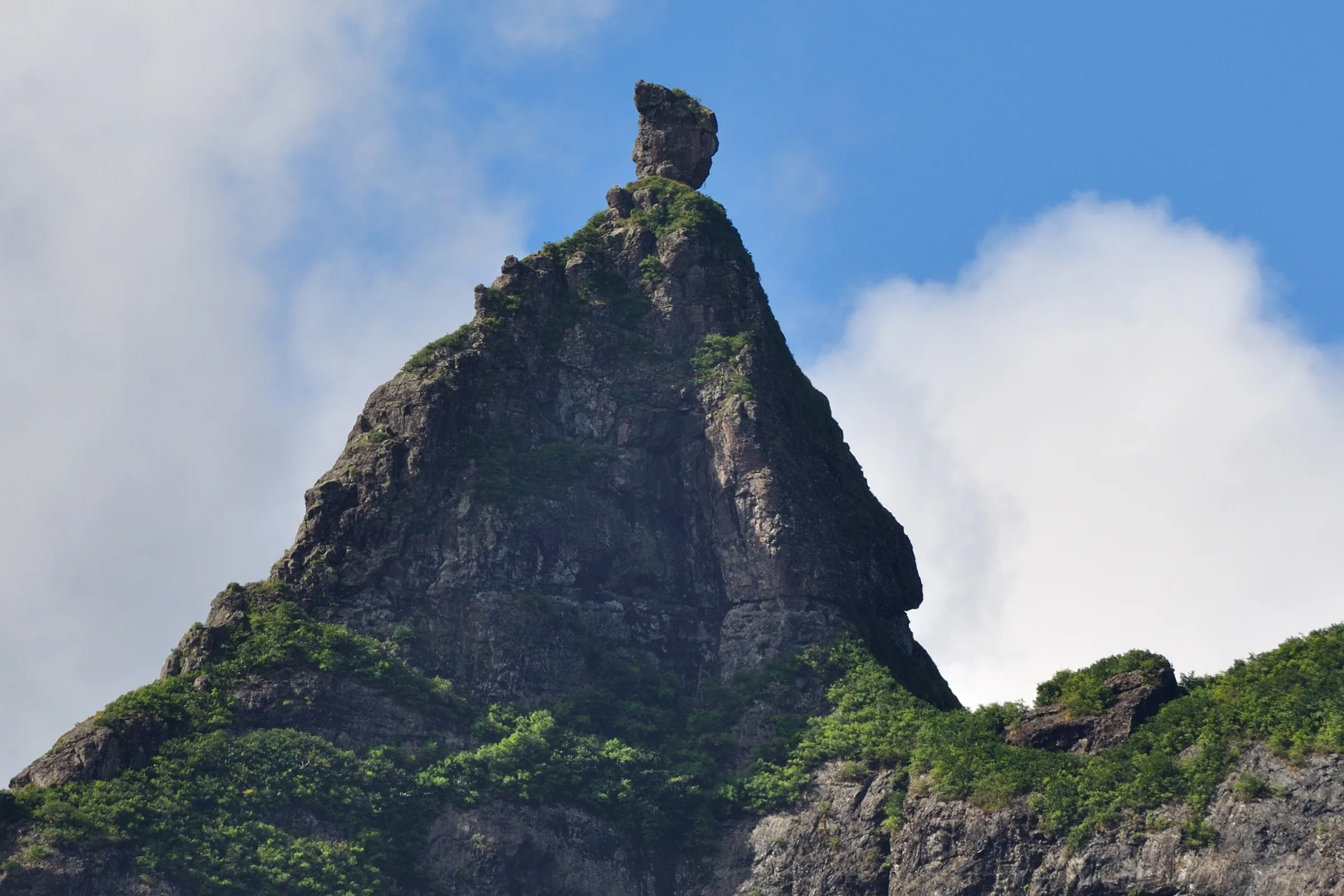
Pieter Both, at 820 m the second-highest mountain on the island, stands about 2.8 km east-north-east of the Le Pouce summit along the same ridge. Its summit is a balanced boulder about 9 m across with a flat top of about 2 m, first climbed on 7 September 1832 by a party of British officers, and it is reached today with ropes and a guide, which is why for most visitors it is a view rather than an objective.
The best viewpoints are free. From the grassy meadows and the shoulder on the Le Pouce trail the boulder shows clearly above the ridge to the east, and from the summit it is the obvious landmark. The Moka Range page on this site explains the whole ridge, and the comparison page sets out honestly what changes if you want to climb Pieter Both itself.
Domaine Les Pailles and Bagatelle, two different kinds of stop
Domaine Les Pailles is a large estate in the Pailles valley on the Port Louis side of the range, about 4 km from the trailhead in a straight line, long run as a heritage and leisure park. Its current status is uncertain. Reports describe a change of ownership and the closure of parts of the estate, with some facilities still operating, and nothing authoritative confirms what is open today. This page therefore lists it without recommending it. If you want to go, check directly before you drive out.
Bagatelle Mall of Mauritius, at the Réduit end of Moka about ten minutes from the trailhead, is the opposite case, a known quantity with no mystery. Opened in 2011 with more than 140 shops, a food court, cinemas and a hotel, it is where to buy water and sun cream before the hike or find a meal and air conditioning afterwards. It is not a sight, and it is on this list only because hikers ask where the nearest proper shops are.
Questions people ask
What is there to do near Le Pouce besides the hike?
Within a short drive of the Petit Verger trailhead you have Eureka House, the Creole mansion of 1830 in Moka; the capital, Port Louis, with its market, Aapravasi Ghat, Citadel and waterfront; the Pamplemousses botanical garden created by Pierre Poivre in 1770; and the Trou aux Cerfs crater at Curepipe. Pieter Both is best seen from the Le Pouce trail itself. Le Réduit is an external stop except on its rare open days.
Can I combine Le Pouce and Pamplemousses in one day?
Yes, comfortably. Climb at first light and be back at the car by mid-morning, then drive 30 to 40 minutes north through Port Louis to the garden, which is about 12 km from the trailhead in a straight line. The garden is flat and shaded, so tired legs cope. Allow two hours there and expect the drive back through the capital to be slow in the late afternoon.
Is Eureka House open, and what does it cost?
This site does not publish Eureka’s opening hours or prices because they change. Check with the house before you go, and ask whether lunch or tea is being served that day. The house is about ten minutes from the trailhead, so even a closed gate costs you little time, but it is better to know before you set out.
Can I climb Pieter Both instead of Le Pouce?
Not in the same way. Le Pouce is a walk with a steep, exposed finish and needs no gear. Pieter Both’s summit is a balanced boulder reached with ropes and a guide, and most visitors see it from the Le Pouce trail rather than climb it. The comparison page on this site sets out the difference. Attempt it only with a guide and on a dry, calm day.
Is Domaine Les Pailles open?
The honest answer is that this guide does not know. Reports describe a change of ownership and partial closure, with some facilities still running, and no authoritative source confirms the current position. It is listed here for completeness, about 4 km from the trailhead, and you should check directly before going rather than trusting an old guidebook or this page.
Where is the best view of Le Pouce itself?
From the Citadel in Port Louis, where the mountain stands almost due south above the roofs and Darwin’s thumb-like projection is easy to recognise. Within the city, tall buildings now hide it from many streets. From the Moka side the peak is a clean point on the ridge rather than a thumb. The photography page covers the best light and frames.
Put the day together
The day plan sequences the dawn climb, Eureka and the capital with honest timings and the moments to rest.