
Where to eat near Le Pouce
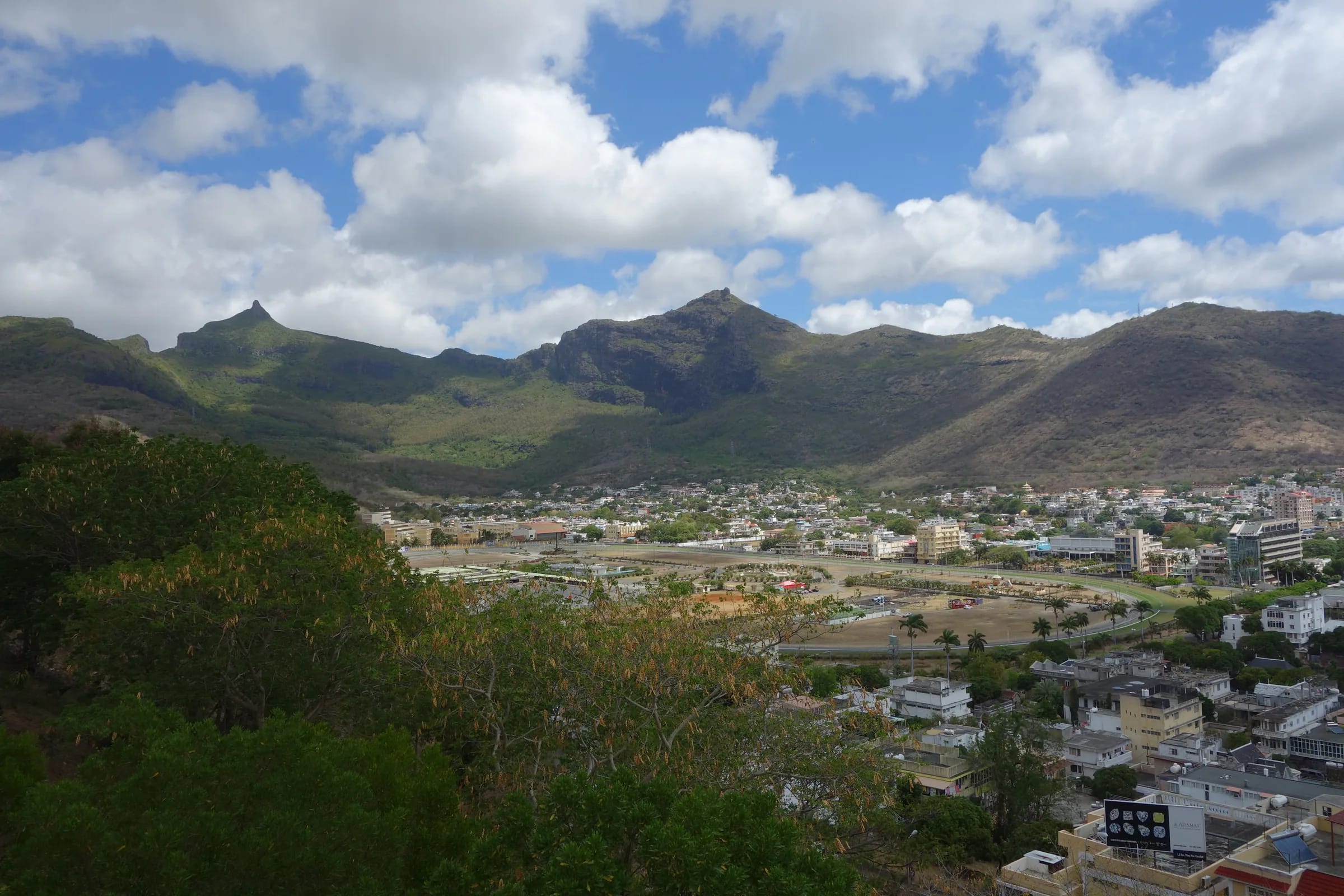
Le Pouce sits between two very different places to eat. On the Moka side are villages, offices and a mall with a food court. Over the ridge is Port Louis, where the Central Market and Chinatown serve the island’s street food. Nothing is sold on the mountain itself, so the day is usually an early climb followed by a late breakfast.
Read the guide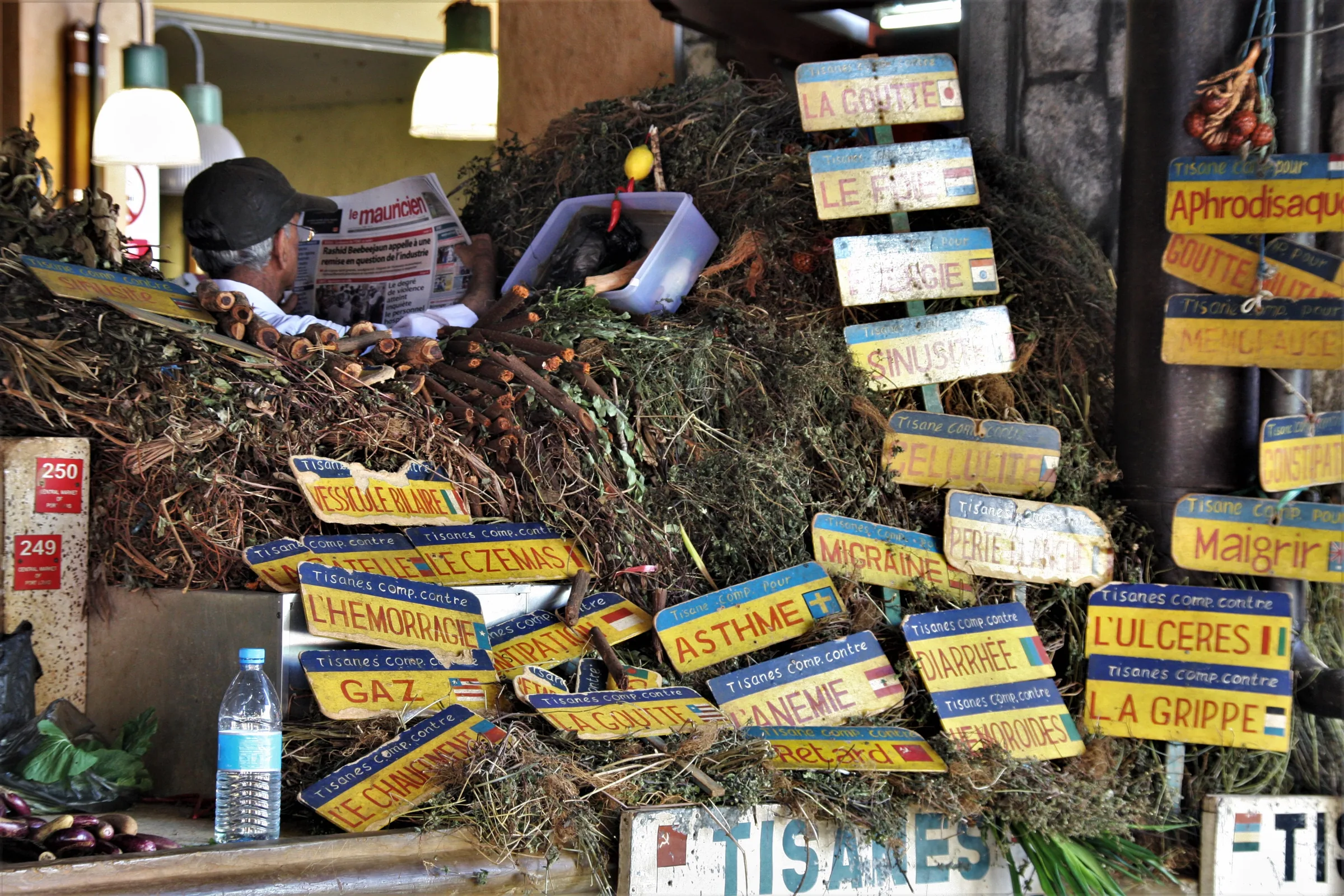
An early start means a late breakfast
Most people climb Le Pouce early, and for good reasons. Sunrise in Port Louis falls between about 05:22 in November and 06:45 in July, the air is coolest before mid-morning, and the summit is more likely to be clear before cloud builds on the ridge. The standard route from Petit Verger takes two to three hours there and back for most hikers, with published times ranging from under two hours to about four, so a first-light start puts you back at the car between nine and ten.
That timing shapes the eating. Breakfast before you leave is often a quick coffee and something from the kitchen of wherever you slept, because very little is open at that hour and nothing is sold at the trailhead. The real first meal of the day happens on the way down the hill, in Saint-Pierre, Moka or, if you are heading straight on, in the capital. Plan for it rather than arriving at the car park hungry with nothing in the bag.
What to carry up the mountain
There is no water on the route and no stall, kiosk or vendor anywhere on it. The large kiosk you pass near the start of the Petit Verger track is a shelter, not a shop. Guides recommend at least 1.5 litres of water per person, and many hikers carry about two, which is sensible in summer when the lower track through the cane has little shade.
Food on the mountain works best when it is simple and survives heat in a rucksack. Bread, fruit, nuts, a boiled egg or a wrapped roti bought the evening before will all do. The summit itself is small, comfortable for about six people and crowded above ten, so the better place to eat is the grassy shoulder below the final climb, where there is room to sit and the view over Port Louis is already open.
- Pack everything in a closed bag. Long-tailed macaques live on the mountain, and while hikers describe them as close but not pushy on the Petit Verger side, loose food invites trouble. Never feed them.
- Take every wrapper and bottle down with you. Botanists surveying the reserve in 2011 called it “Bottle Mountain” because of the litter near the summit.
- Add a salty snack. The climb is short but sweaty, and a few gateaux piments or a packet of crisps replace what you lose.
- Carry a little more than you think you need. If cloud or wind keeps you waiting below the summit, the extra food is what makes the wait pleasant.
Saint-Pierre and Moka for the first real meal
Saint-Pierre is the working village below the trailhead, not a place that caters for visitors. Like most Mauritian villages it has small snack bars and corner shops along the main road where you can find a roti or a dholl puri, a plate of fried noodles, a samoussa or a cold drink, but what is open depends on the day and the hour, and nothing is guaranteed before mid-morning. Treat it as a pleasant possibility rather than a plan.
Moka is a different kind of place. The district holds the State House at Le Réduit, the University of Mauritius, the Mahatma Gandhi Institute and a spread of newer business parks, so its cafés are shaped by students and office workers and are at their best on weekdays. Bagatelle, the large mall on the Moka side, has a food court and sit-down restaurants and is the most predictable option when a group wants different things, or when you arrive at an awkward hour. It is not atmospheric, but after three hours on a hot mountain, air conditioning and a long drink have their own appeal.
Eureka, the Creole house of 1830 ten minutes from the trail, is a natural stop between the hike and lunch. Check what is offered on the day you visit rather than counting on a meal there.
Street food in Port Louis
The capital is where Mauritian street food is at its most concentrated. Start at the Central Market, the island’s oldest and largest, entered through Victorian wrought-iron gates beside Place S Bissoondoyal. In and around it are the stalls that feed the city’s workers. Dholl puri is a soft flatbread stuffed with ground yellow split peas, folded around a curry of butter beans and a spoon of tomato chutney. Gateaux piments are small fritters of split peas and chilli. Samoussas come filled with peas and potato. Alouda is a cold, sweet drink of milk, basil seeds and coloured jelly that makes more sense in the heat than it sounds.
A couple of blocks north is Chinatown, laid out by Chinese traders at the start of the nineteenth century and still the place for boulettes, the steamed dumplings and fish or meat balls served in a light broth, and for mine frit, the fried noodles that Mauritians of every background claim as their own. The Caudan Waterfront, on the harbour, is where the sit-down restaurants and the air-conditioned cafés are, useful if you have walked across the mountain and want a chair.
Two practical notes. The market is a morning and midday place and it winds down through the afternoon, so if the food stalls matter to you, go there before the Citadel rather than after. And choose busy stalls with quick turnover, which is the oldest rule of street food everywhere and works well here.
Three ways the meals fit around the hike
How you eat depends mostly on where you start the day and whether you have a car. The table sets out the three patterns that work, and the day itinerary page turns the first of them into an hour-by-hour plan.
| Pattern | Where you eat | When it works |
|---|---|---|
| Dawn climb, Moka breakfast | A snack on the shoulder, Saint-Pierre or Moka around ten, Port Louis for a late lunch | With a car or taxi, from any base, the standard full day |
| Through-hike to Port Louis | A snack on the mountain, then a late lunch in Chinatown or at the market after coming down through Tranquebar | By bus at both ends, for fit walkers on a dry day |
| Port Louis base, climb from Tranquebar | Supplies bought the evening before, eaten on the mountain, then lunch back in the city | For early risers taking the longer northern route |
A few local habits worth knowing
Mauritian food is a layering of Indian, Chinese, Creole and French cooking, and street food is where the layers show most clearly, often from neighbouring stalls. Eating standing up, or sitting on a market step, is completely normal. Dholl puri is eaten by hand, folded, and the first one is rarely the last.
Port Louis is hot. It sits in the rain shadow of the south-east trade winds, its mean daily maximum is around 29 °C across the year and wet-season highs are usually around 31 °C, so drink more than you would at home and keep the water bottle from the hike in use all afternoon. Fruit from the market stalls helps too.
Questions people ask
Can I buy food or water at the Le Pouce trailhead?
No. The Petit Verger start is a small car park at the end of a farm lane above Saint-Pierre, with no shop, no tap and no vendor, and the kiosk on the first stretch of the track is a shelter. Buy water and food the evening before, or in Saint-Pierre and Moka on your way, and carry at least 1.5 litres of water per person up the mountain.
What is dholl puri?
Dholl puri is the island’s best-known street food, a thin, soft flatbread stuffed with ground yellow split peas and folded around a curry of butter beans with tomato chutney and pickles. It is eaten by hand, standing up, and it is most easily found at the stalls in and around the Central Market in Port Louis and in the towns of the central plateau.
Where is the Central Market in Port Louis?
In the centre of the capital, a short walk from the harbour and the Caudan Waterfront, with its Victorian wrought-iron gates on Place S Bissoondoyal. It is the oldest and largest market on the island. Chinatown is a couple of blocks to the north, and the Citadel, with its view back to Le Pouce, is on the hill above the Champ de Mars.
Is it a good idea to eat at the summit?
Only a quick bite. The top of the thumb is small and feels crowded with more than six people, and on windy days nobody wants to be opening a bag there. The grassy shoulder below the final climb has room to sit and the same open view of Port Louis, so most hikers eat there on the way down and leave the summit to the next group.
Is Mauritian street food safe to eat?
For most visitors, yes, with the usual care. Choose stalls that are busy with local workers, where food turns over quickly, and eat things that are cooked or fried in front of you. Carry your own water. If you have a sensitive stomach, start with cooked items such as dholl puri, roti or boulettes rather than raw salads or cut fruit.
What should I eat after the hike if I am staying on the coast?
If you are driving back to Grand Baie or Flic en Flac, Moka is on your way and Bagatelle is the easiest place for a group with a car. Port Louis is a worthwhile detour for the market and Chinatown if you have the afternoon. Otherwise eat near the trailhead in Saint-Pierre if something is open, and save your appetite for the coast.
Put the meals into the day
The full day plan sets the dawn climb, the late breakfast in Moka, Eureka and the capital out hour by hour.